
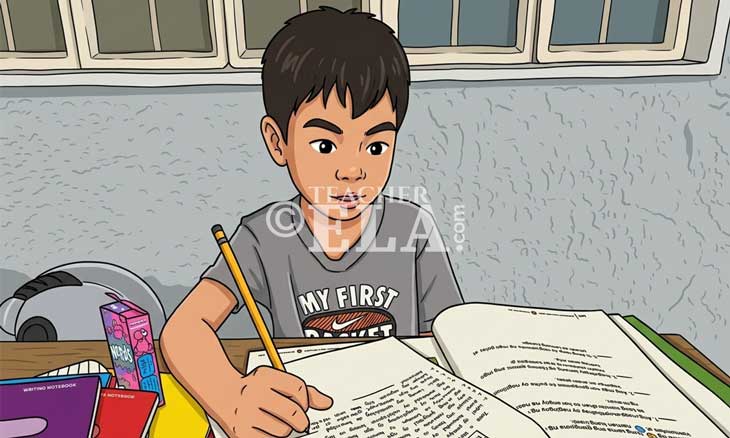
In the Philippines, homeschooling means that a student learns at home. Although this simplified definition is correct, this article will help you to know more about homeschooling and its benefits.
Formal homeschooling requires the learner to be enrolled in a school that is accredited by the Department of Education (DepEd). This means that the student follows the school’s curriculum. Some school does not require a homeschool teacher for the learner but instead, the parent can stand as a teacher. In this type of schooling, there are still final examinations, however, the student takes them via remote session. To wrap up, the enrolled learner is not required to go to his/her school all throughout the school year. To below are the benefits of homeschooling.
1. Low-Cost but Focused Learning
In a face-to-face learning enrolled in school, the student is required to attend his/her daily classes but this is not easy as we all thought. There are many other factors to consider. Sending a student is not just about the academic fees. Before the classes begin, the parents should provide uniform, shoes, and school supplies. During the school year, parents wake up early to prepare the child’s needs for the day. Also, they have to send or hire a service for them. With the rising current global oil crisis, the budget fuel doubled. In addition, students have to answer assignments and do projects outside classrooms. If the child is having academic hurdles, it is the duty of the parents to teach or to hire a tutor for him/her. Lastly, there are other activities in school such as field trips, camps, and many more. Overall, the parents’ physical effort isn’t just enough to support the child’s learning. Sending a student to school also requires extra money.
In homeschooling, the parents need a small portion budget. Why? They just need to pay the tuition fee and that’s it! Just saved all of the hassle. If the parents are too busy for their jobs or businesses, they can just hire a tutor teacher to facilitate learning to the student. The teacher has sole focus to the learner. Since it is going to be one-on-one, the teacher easily spots the strengths and weaknesses of the student. This helps him/her to use these as bridge to help the student pass through his/her hurdles.
2. Flexibility Bridges More Extracurriculars
In the Philippines, people are trained to study/work early in the morning. Since it is part of the country’s culture, even students aged 3-4 start their classes at 7am as the earliest. Some classes end around 1-4PM. With this, the learner should wake up early in order to prepare for his/her classes for the day. Note that most of the schools conduct in-person classes, five times a week. After a long day of learning, they go home with tons of homework. They only get to rest on the weekends if there are no projects to finish.
This does not only affect the students. Parents on the other hand should be awake at 4AM or even earlier just to make sure that the lunch is prepared, the uniform is ironed, and the student won’t be late in school. This is also the way to combat traffic in sending their children at school. Imagine, the parents are already tired from working each day and instead of extending their sleep in the morning, they have to get them all prepped.
However, in homeschooling, flexibility comes always at hand. If you are a working parent, you can allot 2-3 hours of your vacant time to teach your child for the day. If you work on an early morning shift, you can teach him/her in the afternoon. If you work on a graveyard shift, you can give them time whenever you are ready.
Since it is homebased learning, the learner can explore his/her house and community even more. Instead of spending half of the child’s day sitting on a chair inside the classroom, he/she can enjoy other activities that enhance skills that are needed in real-life situations such as cooking, baking, gardening, crocheting, writing, singing, dancing. They can also enjoy playing instruments, mastering chess, involving to sports and many more. This is more effective with the help of a facilitator of learning.
3. Less Screen Time, More Physical Activities
In traditional learning, students are expected to sit properly for more than six hours. They are trained to listen to their teachers and to comply whatever they are asked to do. They only get to stand during group activities and breaktimes or if they have PE classes, but this only occurs once a week. Inside a 21st century classroom, a television is present. The teacher brings his/her laptop to bridge the presentation. Some schools replace books with laptops. Come to think of it if you are a parent that has to fight screentime with your kids each day. Today’s generation has no escape with screens since the use of technology is embraced in learning instruction, it is hard for children to get out from screen dependence.
In homeschooling, with 2-3 hours of learning per day, the teacher/parent could make each session a “no screen” type of learning. It is highly attainable if the facilitator is creative and patient in preparing activities that suits the learning objective and interest of the student. With this, the learner could enjoy the rest of the day by doing physical activities that may be inside or outside the house.
4. Safe from Bullying
Whether we admit it or not, bullying still exists in the academy. Just by calling your kid fat or ugly by a schoolmate makes a great impact to the learner. In worse case scenarios, when hurting becomes physical, this traumatizes the children even more. This is difficult especially when the ones getting bullied is afraid to speak up while the bully slowly grows into a dangerous predator.
In homeschooling, we can protect our children from bullies. We can shower them with love, care, and protection. It is possible by creating a safe environment for the child where his/her voice could be heard.
5. Secured from Natural Disasters
Have you ever thought of when a sudden earthquake strikes and your children are still at school? How would a little child protect himself/herself from a natural disaster? Even though, keeping them safe from these are being taught in school, do you think they can handle it?
In homeschooling, you do not need to worry. If the students learn at home, they could be held during emergencies. No one needs to be put in harm since you are sheltered in one roof.
To conclude, these are some of the reasons why you should consider homeschooling. Sure, it is a big step to take but it will surely make your life easier and bearable. No more sacrificing your sleep just to juggle work and parents’ duties. Since we cannot borrow time, now is the time to embrace flexibility through homeschooling.
If you are ready to transition from traditional learning to homeschooling, make sure to select a school that provides the learning needs of your children. Also, hire a tutor that has the best credentials.
May homeschooling be a blessing to your family. Godspeed!
