
Since teaching early education is a tough duty, this article will surely help not only the parents but also the teachers/tutors that provide in-person teaching service at home. The given tips below are realistic and achievable as these are also practiced by the author.
1. Colorful and Tangible Teaching Materials
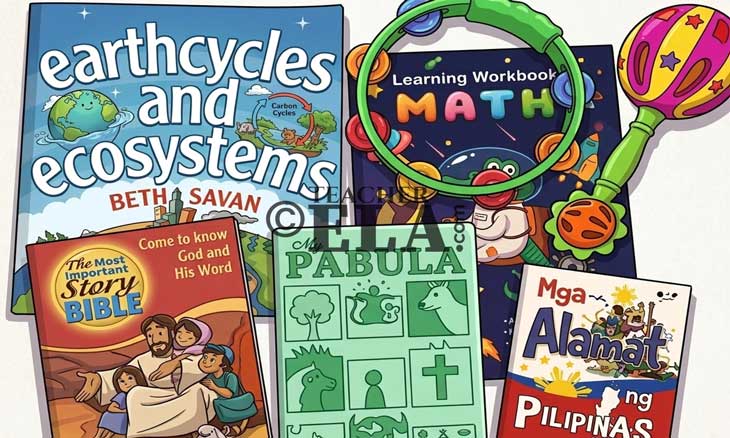
Instructional materials are significant in the learning process of children. Make sure that teaching and learning materials are tangible so that learners will be hooked in the lesson. Let them use their senses during the learning process. Allow them to touch the materials. As possible, make it colorful and durable so that you can use it the next time.
2. Appropriate Activities/Worksheets
Since the child is still in the process of developing his/her motor skills, make sure that you give worksheets that could be finished in one sitting. It is not advisable to give more worksheets to a toddler. This will make them feel bombarded that could result in hatred for learning.
3. Learning Through Play
Play-based learning is an educational approach that lets the child learn through play. This may sound inappropriate at first as most parents believe that during study time, the child should be focused on learning alone. Any other concept that opposes learning will just serve as distraction. However, this misconception that play and learn should never be intertwined should be dismissed immediately. Modern educational trends suggest that playing acts as a vital key to learning. It is time that not only parents but also educators should embrace this learning approach.
In a situation where a three-year old child is still invested in playing. The parent aims to teach letter sounds to his/her child. Do you think the parent’s goal is attainable before the child reaches another year? The answer to that question is a big YES. How is that even possible, you ask? Simple, the parent should use educational materials that look like “toys” to children but serve as an instructional material in reality. Also, since we are in the 21st century, maximize the use of the internet. Play songs that sound out the letter but a gentle reminder not to use them too often. This is to avoid children’s dependence on screens.
4. Learner-centered Teaching
Learner-centered teaching is when the spotlight is on the learner and not on the teacher. This breaks the teacher-centered approach where the instructor does all the talking. In this learner-centered approach, the teacher just serves as facilitator of learning. He/she does not tell the students what to do but instead the teacher serves as guide so that the learner develops independence while learning.
If the child’s answer is incorrect, do not give them the correct answer instantly. Help them come up with the correct one by using the art of questioning.
If the child gets too “bored” in the middle of your learning session, make sure that you do not control their decisions. Since you are trying to introduce learning to a young kid, make sure to offer him/her learning choices such as letting them choose their school supplies and communicating to them their desired time of learning.
Remember, learning is not about you or the topic, it is always about the learner.
5. Breaks from Learning
The parent/teacher could give ample time for the child to do anything that he/she likes except for using gadgets during their one-hour learning session. Some activities are coloring, crafting, dancing, etc. Note that the timer should be visible to the child. The parent should constantly remind the child on how many minutes are left on his/her break time. When it rings, the child might disregard it at first, but with constant practice, he/she will slowly adapt to the practice that his/her parent is doing.
6. Adapt Rewarding System
B.F Skinner theorized that rewards and punishments could affect human behavior. This is the reason why his theory is widely practiced in learning. Giving positive reinforcements boosts the learner’s positive behavior. With this, he/she will most likely repeat the good behavior.
For example, the child perfectly sounded out all the English alphabets. The teacher/parent will give rewards. This could be in a form of praise such as saying “Very Good” or “Good Job” or it could be by giving stars or stamps. This will motivate the learner to participate more in the learning process.
7. Study-Life Balance
If adults are expected to practice work-life balance, children on the other hand are encouraged to have a study-life balance.
As parents/teachers, it is our job to make sure that they are never left behind in learning. However, remind yourselves that they have other activities to enjoy outside learning. Do not enclose them in a box. Spend time during the weekends. Let them play outdoor activities or board games indoors.
8. Nurture the Intelligence
Be observant of the skills that your child currently possesses. If you can see that they are fond of coloring, print them more coloring sheets. If they can sing, give them a microphone. If they love to groove, dance with them. If they are physically active, enroll them in a sports club. If they love to read, bring them to bookstores.
Remember that we cannot mold them to what we want them to be. Our job is to help them know and nurture the intelligence that they already have. Be a supportive being that claps when they enjoy their intelligence/s.
9. Designate a Space for Learning
Do not try to teach a child in a random place in the house. For example, if you teach them in the kitchen, it will be confusing for them if the kitchen is a place of learning or eating. That’s why try to make a space for your child’s learning. Make sure to designate a space or room for learning. With this, they will be conditioned that once they are in that learning area, they should be ready to learn.
10. Let them Teach You
This is one of the common techniques to know if the child learned from a session. How is that even possible? It is because the moment that the child is competent and confident enough, he/she can teach others as well.
In this case, you can ask the child to teach you the sounds of the English alphabet. He/she can use flashcards to point at the letter and tell you its sound.
Always remember that learning is a process. Rushing will not do any good to the child’s learning. Do not expect a toddler to be competent instantly on the first day, week, or month of learning. Let them learn at their own pace and grow each day. Take note that learning is not about you, it is always about the learner.
