
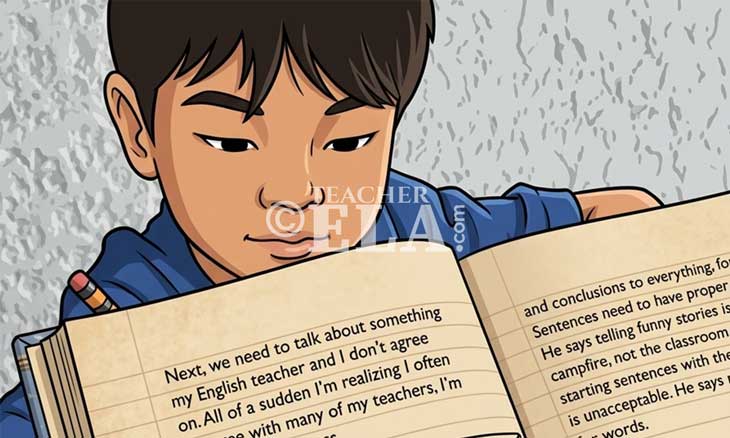
Have you ever wondered if you can teach your child reading at home? You may be thinking of how difficult it is especially if you do not have a background in teaching. However, let me tell you that whoever you are, you are able to teach! You just need to follow this guide.
(Ages 1-3)
1. Introducing the ABC song.
In the earliest age possible, play the ABC song to your children. This allows them to unconsciously memorize the letters of the alphabet through a song. As this does not guarantee that they are able to point which letter is said or sung, this is a small step yet a big advantage to them.
2. Paste charts in the playroom.
Since toddlers remember objects, people, and others whenever they see them, it is highly suggested that they have sight on the letters of the alphabet patched on the wall. Ask them about what they see in the chart. For example, the letter Mm has a monkey on it. It is okay if they cannot identify the letter itself. Simply ask them if what animal is on the chart. They answer monkey or if not, you can tell the child yourself. Use the chart as a springboard of communication to your child.
3. Let them play with educational toys.
You do not need to remove non educational toys. Instead, you add colorful, tangible and durable educational toys for them to enjoy. This allows them to spark their curiosity and might ask you what’s the toy they are playing with. For example, if they held the letter Aa, children might ask what it is. This is your time to say that it is letter Aa. Also, you can start teaching them the letter names. But remember, reading is a process, introducing the letters little by little is recommended.
(Ages 4-5)
4. Buy or make flashcards.
Flashcards are available at bookstores and online stores. You can buy them for a cheap price. However, if you want your children to get hooked even more, you may create your own flashcards. You can ask them to put color on the card where you wrote the letter. This allows the child to see that you are invested in their learning and they get to participate in the activity as well.
5. Sound out each letter together.
Create a goal, it is not advisable that you teach all the letters in a week. Start with one letter per day. Using the flash card, say its sound and show how it’s done. Also, say words that begin with short vowel Aa such as apple, ant, ax, or alligator. You may say it like this – a/a/a/ apple, a/a/a/ ant, a/a/a, axe, a/a/a alligator. Putting emphasis on the letter sound makes them remember it. Then ask the children to say the word like you did. Make a harmony so that they remember the sound easily. Remember to start with the vowels which are Aa, Ee, Ii, Oo and Uu before introducing the consonants. Also, before teaching them a new letter sound, review the ones that you have taught them yesterday.
6. Show objects/pictures to strengthen knowledge on beginning sounds.
To widen the children’s vocabulary, show them pictures or objects while practicing letter sounds. For example, point to a car and ask – “What is that?” They answer “car” and you can tell them, “Correct! That is a c/c/c car!” Then, ask them to repeat what you’ve said.
7. Teach them “abakada” or syllable reading.
After knowing all of the letter sounds, you can now proceed to teaching them how to read by syllables. Start with the vowels – Aa, Ee, Ii, Oo, Uu. Then, add the first consonant which is the letter Bb. It goes like this – ba, be, bi, bo, bu. Do not forget to show pictures and guide them while sounding out whenever you’re introducing syllable reading. For example, ba/ba/ba babae then point or show a girl. You may check and download this worksheet for the learner to master syllable reading.
8. Guide them to spell words they recently just learned.
In spelling, do not expect that they can write words instantly on their own. Through the scaffolding method, the learner spells the missing syllable to form the word. For example, you want them to spell the word bibo. You can use the fill in the blanks type of test – ___bo. You can help them out by saying b/b/b/bi, so that they can identify that bi is missing to form the word bibo. Lastly, you have to ask them to read the word. You may check and download this worksheet for the learner to master syllable spelling.
9. After finishing the abakada lesson, proceed to phrases.
Since they already mastered the letter sounds and syllable reading, the children can now proceed to reading longer texts. This enhances their reading, vocabulary, and comprehension.
10. Let them read sentences and paragraphs.
Since you started a strong foundation, the children are now able to read sentences and paragraphs. This is their entrance door toward reading literacy. After each passage reading, ask questions to develop comprehension. This is a crucial step as some learners are fast readers. However, they do not understand the thought of the text. That is why for every reading material, make sure to ask follow up questions in order for the reader to analyze the texts. This allows them to make it a habit to understand what they’re reading.
Learning is not one size fits all. Since each learner is different, make sure to use their strengths to combat their weaknesses. Make each learning session fun and exciting, not everything should be learned by the book. Start teaching early education as early as possible. Stop the stereotype where school should be the ones teaching them first. As parents, you bear a responsibility to help your children with literacy. If you started teaching them later, do not rush them into being a reader. Let the learners take their time, pressuring them does no good.
